
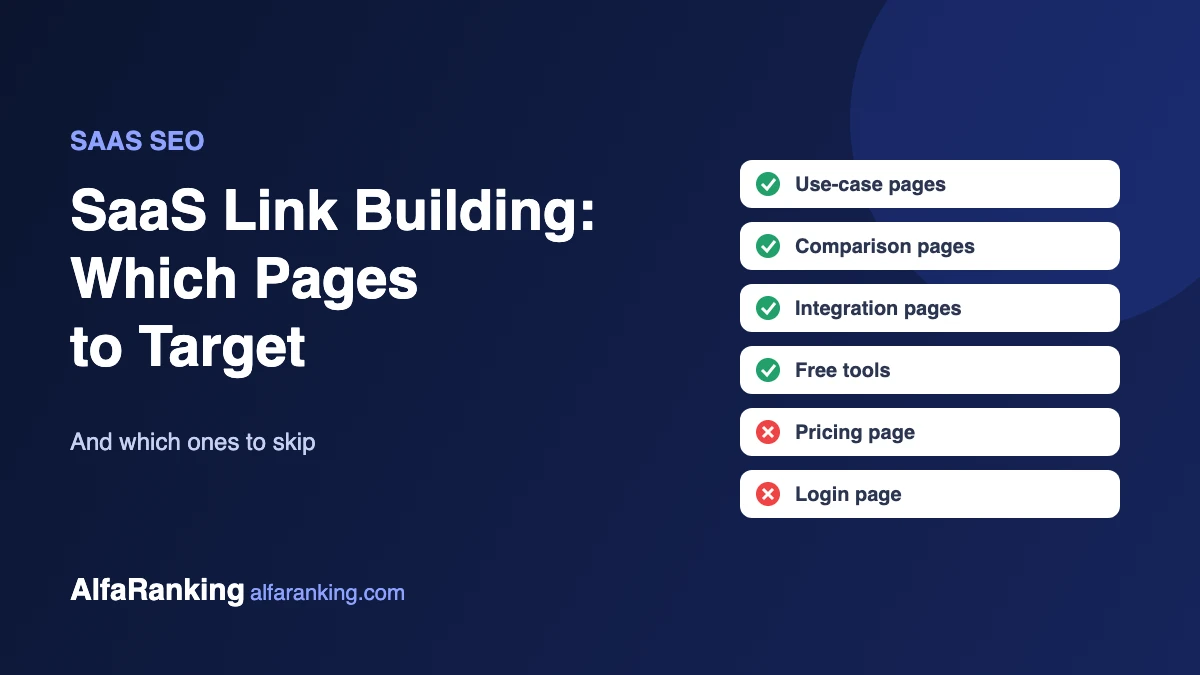
Many SaaS teams point every link they earn or buy at the homepage. It feels safe, but the homepage usually ranks for your brand name already. The pages that bring in new trials, such as feature, use-case and comparison pages, often get no links at all.
Here’s which SaaS pages are worth building links to, which to skip, and how to spread the value across your site.
Why the target page matters
A link mainly helps the page it points to, and the pages that page links to. Your homepage gets brand links naturally from directories, review sites, press and partners. Commercial pages that target searches like “invoice automation software” have to compete with established tools, and they rarely attract links on their own. That’s where deliberate link building pays off.
Pages worth building links to
1. Feature and use-case pages
These target what buyers type when they’re looking for a solution: “employee scheduling app for restaurants” or “SOC 2 compliance software”. They match commercial intent, so even a few rankings can bring signups. Make sure each one targets a single clear search and has enough useful content to deserve a link.
2. Comparison and alternatives pages
“Tool A vs Tool B” and “Tool A alternatives” pages attract people who are close to a decision. They’re competitive, so links help a lot. Keep them fair and accurate. Pages that misrepresent competitors lose trust with readers and with the sites you want links from.
3. Integration pages
Pages like “connect your CRM to Slack” often face less competition than core feature terms and convert well, because the visitor already uses a tool you work with. They’re a good early target for a young SaaS site.
4. Free tools and templates
Calculators, generators and templates tend to earn links naturally because people want to share something useful. They also make guest posts easier to place, since you’re linking to a resource rather than a sales page. Link from them internally to the related feature pages.
5. Original data and research
A survey, benchmark or analysis of your own product data gives writers something to cite. One solid study can earn links for years. Guest posts that reference your data are more natural than ones that push a product page.
6. Your strongest guides
Long-form guides that rank for broader questions bring in readers early in the buying journey. Links to these pages lift them, and internal links pass part of that value on to the features they mention.
Pages you can usually skip
- Pricing page: people mostly find it by searching your brand name, so it rarely needs external links.
- Login, signup and account pages: nothing to rank for.
- Changelog, legal and careers pages: useful, but not where search growth comes from.
- Thin glossary pages: a two-line definition won’t hold a ranking, however many links it gets.
- The homepage, beyond brand mentions: it collects links naturally, so don’t spend budget on exact-match anchors to it.
Anchor text for SaaS links
Use a natural mix: your brand name, the plain URL, and descriptive phrases like “a tool for scheduling restaurant shifts”. Repeating the same exact commercial phrase, such as “best scheduling software”, across many links looks manipulative and adds risk without much benefit.
Choosing the right sites
Relevance matters more than a high score. A link from a well-read marketing, HR or developer blog that your buyers actually read beats a general site that covers everything. Check that the site has real organic traffic in your target market (here’s why traffic matters more than DR) and run it through our 12 site-quality checks. Paid placements should carry rel=”sponsored”, as Google’s spam policies require.
Spread the value with internal links
External links work best when your own site passes them along. From every guide, tool or study that earns links, add clear internal links to the two or three feature pages it relates to. Link related features to each other, and make sure important pages are no more than a few clicks from the homepage.
A simple order to follow
| Stage | Pages to prioritise |
|---|---|
| Early: few pages ranking | Integration pages, use-case pages, one free tool or template |
| Growing: some traffic and links | Core feature pages, comparison and alternatives pages |
| Established: strong brand | Original research, competitive category terms |
How to measure it
Track the target pages, not the whole site. In Search Console, watch impressions and average position for each page you built links to. In GA4, look at signups or trials that start from organic visits to those pages. Expect movement over months, not weeks, and judge each page against its own starting point.
Building links for a SaaS product?
We place guest posts on relevant tech, business and marketing sites with real traffic, aimed at the pages that bring in trials. See our guest posting services or tell us your product and target pages to get a free list of matching sites.